
The powerhouse of Collegiete golf in the US
Thanks to Conner Lewis from the Society
The First Collegiate Golf Match
The Day College Golf Was Born: November 6, 1896
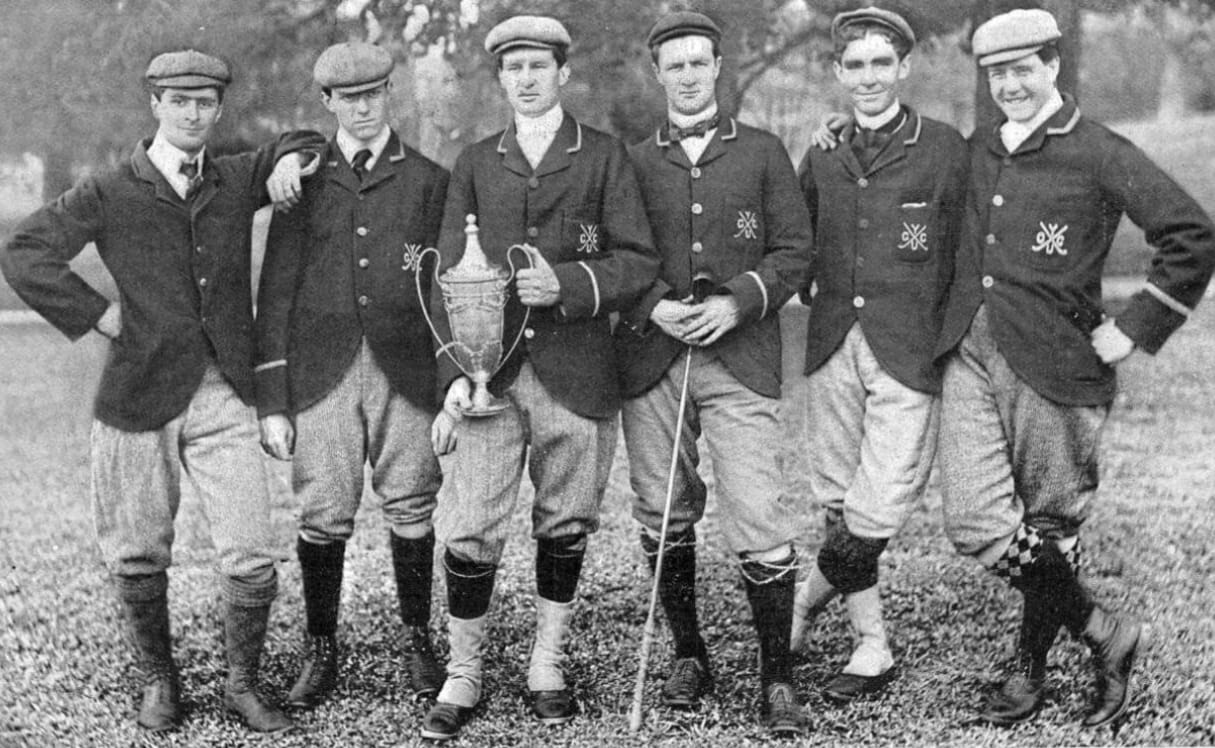
On a brisk Friday along the lower Hudson River, two Ivy League sides quietly made history. On November 6, 1896, Yale and Columbia met at the Ardsley Casino—today’s Ardsley Country Club—in Dobbs Ferry, New York, and staged what contemporary papers and modern historians agree was the first intercollegiate golf match in the United States. The format was simple, the result was lopsided, and the impact was enormous.
Setting the stage: golf reaches the colleges
By the mid-1890s, golf’s American boom was underway, but the college game didn’t exist yet in any formal sense. The Ardsley Casino, a Gilded Age sporting enclave with yacht slips and a much-talked-about golf course laid out by English professional Willie Dunn Jr., became the stage for something new. Dunn, who had recently settled in the U.S. and would later help shape a number of prominent American courses, served as Ardsley’s first professional and designed its original links.
As interest in the game spread on campus, invitations went out to several universities to convene at Ardsley for a novel competition. Harvard and Penn couldn’t field teams in time; Princeton reportedly declined because players didn’t want to miss the Tigers’ football tilt with Harvard. That left Yale and Columbia to inaugurate the sport at the collegiate level.
The format—and the rout
The teams agreed to a “holes-won” format (rather than today’s matches-won scoring), with six singles going out over Ardsley’s heaving ground. When the cards were tallied, the verdict was emphatic: Yale 35, Columbia 0. Contemporary and retrospective accounts make the same point plain—Columbia failed to win a single hole across the entire slate. It reads like a football score, but it was golf, and it set a high bar for the Bulldogs’ early hegemony in the college ranks.
That curious scoring system matters. In an era before standardized intercollegiate formats, counting the cumulative holes captured rewarded relentless pressure as much as match victory. Across six singles, Yale didn’t just beat Columbia—they buried them under an avalanche of won holes. As a piece of sporting theater, it was decisive; as a foundational precedent, it offered a template colleges could refine.
Why Ardsley? Why then?
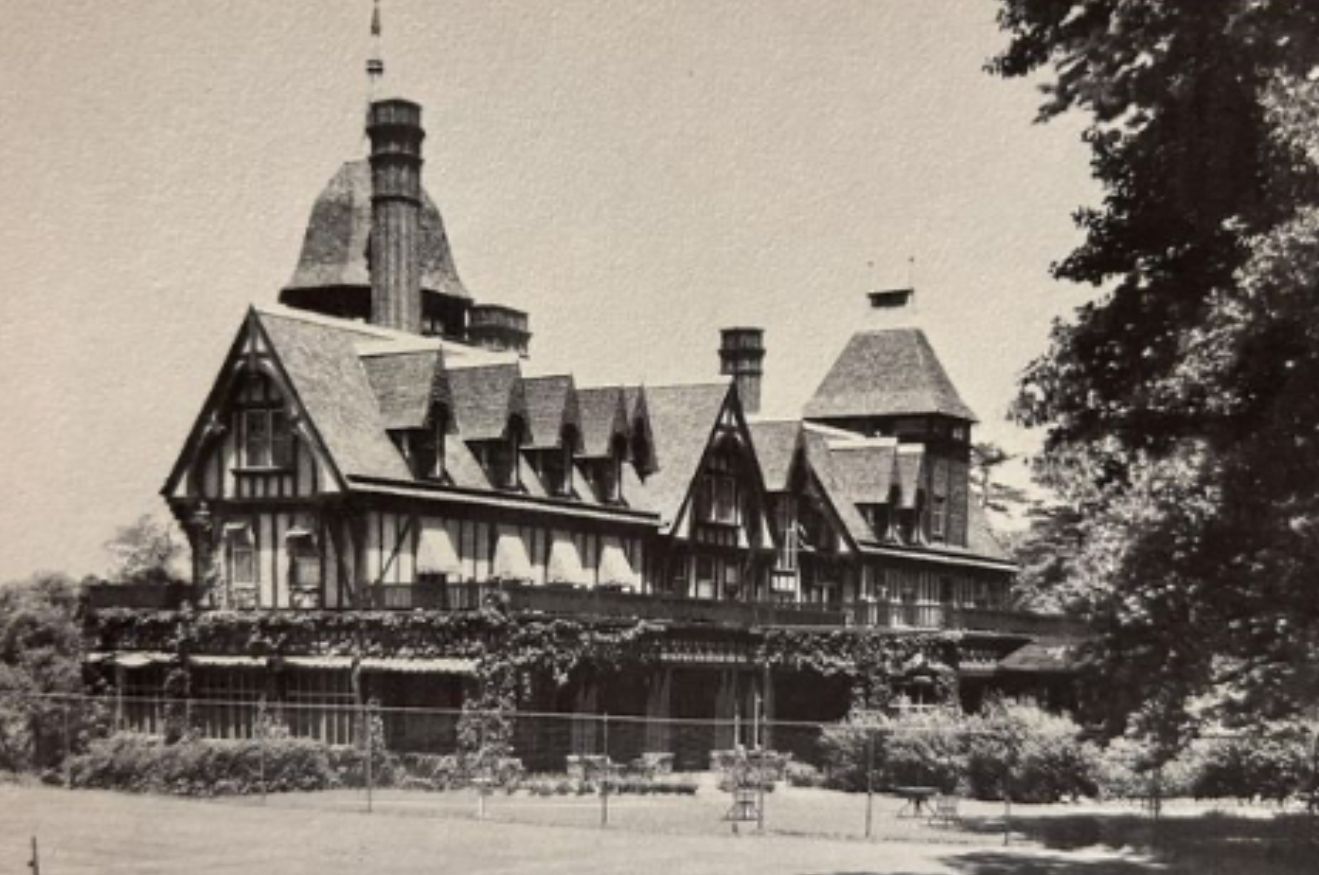
Ardsley Country Club Clubhouse
Ardsley was a logical host. It was fashionable, accessible from Manhattan by rail and river, and carried a certain modernity that matched golf’s moment. The club’s course—“the finest and longest” of its day in local lore—had just opened, and its professional staff and membership were attuned to the game’s potential. Bringing college men to the Hudson for a first-ever match was in keeping with the club’s ambition and the sport’s upward arc.
The timing also fit an American sports calendar in flux. Football dominated November Saturdays; that Princeton story underscores the scheduling tug-of-war already present on campuses. Yet the very fact that Yale and Columbia organized the contest shows how quickly golf had “found its way among the colleges,” as The New York Times put it in a preview noted by multiple modern accounts.
What it started
If 1896 supplied the spark, 1897 built the engine. The following year saw the birth of the Intercollegiate Golf Association (later the National Intercollegiate Golf Association), which organized annual championships through 1938 before the NCAA assumed control in 1939. Yale in particular turned early participation into sustained dominance, stacking national titles as the collegiate game matured and spread westward.
From the Hudson Valley outward, schools began adding teams, codifying schedules, and standardizing formats. The simple notion that students from different universities could meet on a neutral course and test their skills became a durable pillar of American collegiate sport. The scoring systems evolved, the equipment modernized, and the travel footprint ballooned—but the DNA traces back to Ardsley.
A memory rekindled
In 2021, on the 125th anniversary of the original match, Yale and Columbia staged a commemorative “throwback” in nearby Hastings-on-Hudson, consciously
Stand on Ardsley’s rumpled fairways today and it’s easy to imagine the scene in 1896: caps pulled low, brassies and gutta-perchas in hand, a rail car hissing at the station below, and two squads of college men figuring out—literally hole by hole—what intercollegiate golf might become. The result that day was a wipeout. The legacy was anything but.