
Ever think where the humble golf tee came from?
With thanks to Conner Lewis from the Society
Dr. George Grant: The Forgotten Father of the Modern Golf Tee

Dr. George Grant
On December 12, 1899, a quiet but revolutionary moment in golf history took place—not on the links of Scotland, but in the United States Patent Office.
That day, Dr. George Franklin Grant, an African-American dentist from Boston, was granted a patent for the first wooden golf tee. More than a century later, nearly every golfer in the world begins a round using a descendant of Grant’s simple invention. Yet for decades, his name remained largely absent from the story of the game.
A Brilliant Mind Beyond the Fairways

Dr. George Grant was no ordinary inventor. Born in 1846, he became one of the first African-American faculty members at Harvard University, serving as a professor of dentistry. He was a gifted engineer and innovator, holding multiple patents related to dental devices and prosthetics.
Grant was also an avid golfer at a time when the game was still finding its footing in America. Playing at courses like Franklin Park Golf Course in Boston—one of the earliest public golf courses in the country—Grant encountered a familiar problem faced by golfers of the era: how to elevate the ball cleanly for the opening shot.
Before his invention, golfers commonly teed the ball on small mounds of sand, often carried in pockets or provided in boxes near the teeing ground. It was an inelegant solution, prone to inconsistency and inconvenience.
Grant believed golf could do better.
The First Wooden Tee
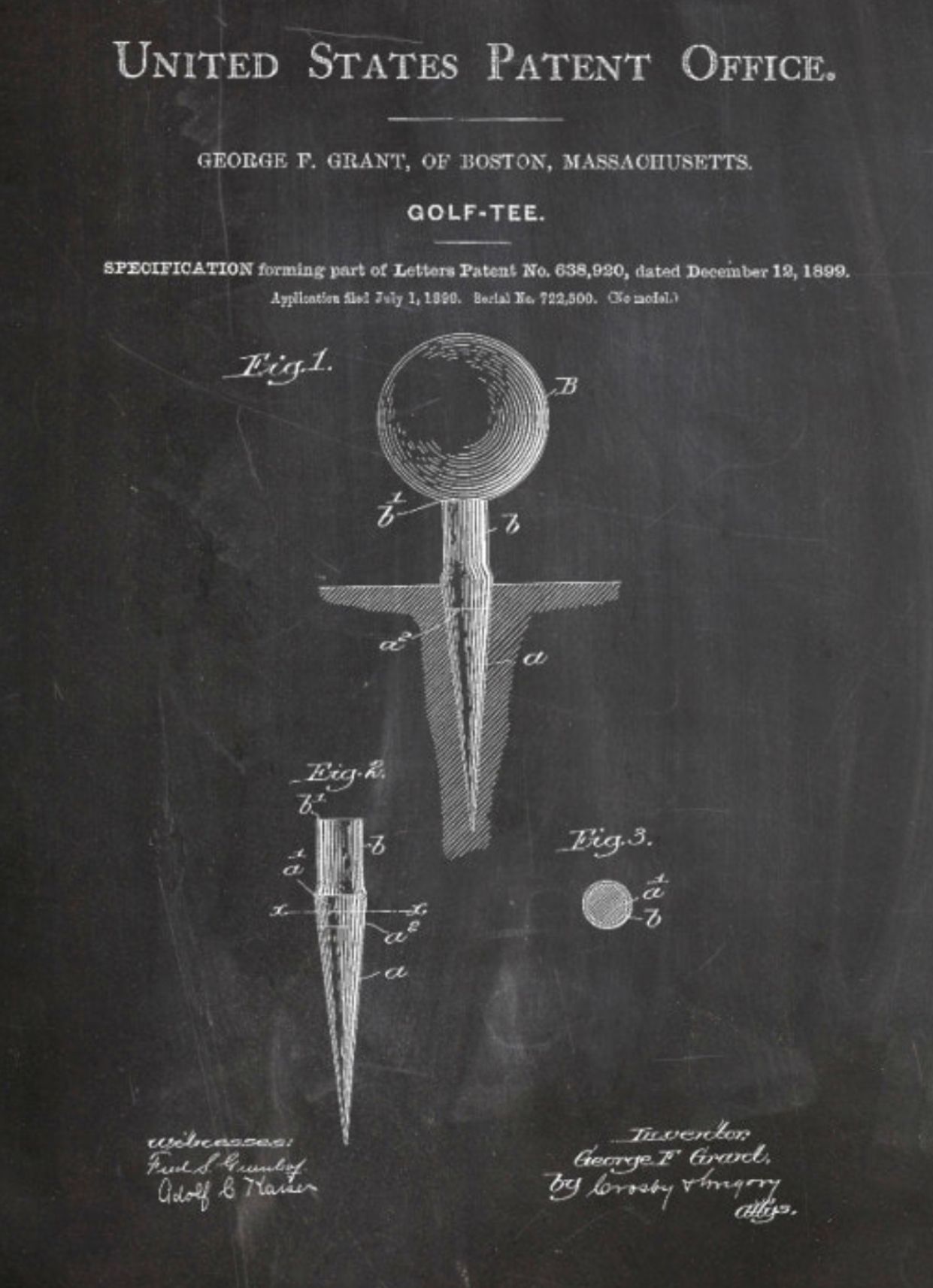
First U.S. Patent for a Wooden Tee
Grant’s patented design was remarkably straightforward: a wooden peg, tapered at one end to push into the ground, with a concave top designed to cradle a golf ball. The concept was elegant, repeatable, and revolutionary.
Yet despite its obvious utility, Grant’s tee did not immediately change the game.
Why?
Grant never aggressively marketed his invention. He shared tees with friends and fellow golfers but did not pursue commercial production. In an era marked by both limited manufacturing pathways and pervasive racial barriers, his invention remained largely regional and informal.
Golf, it seemed, was not yet ready for the tee that would define it.
Erased, Then Replicated
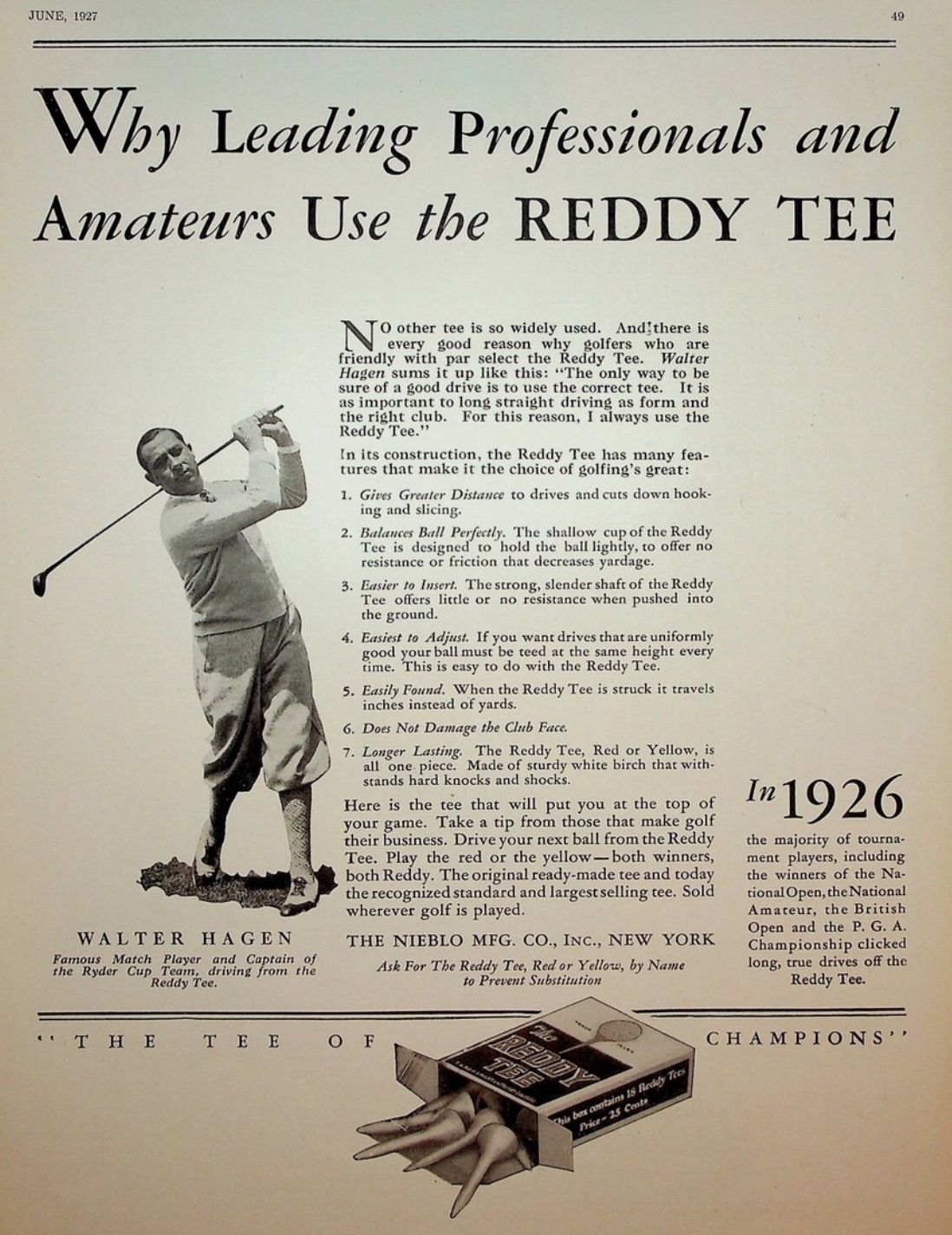
It wasn’t until the 1920s—more than twenty years after Grant’s patent—that the wooden tee entered mainstream use. In 1922, another inventor introduced the “Reddy Tee,” a painted wooden tee marketed aggressively and widely adopted.
The concept was unmistakably Grant’s.
Yet the historical credit was not.
The Reddy Tee became a commercial success, while Dr. George Grant’s name faded into obscurity—an all-too-familiar story of innovation divorced from its originator.
Don’t mistake copy for infringed, Dr. Grant’s patent had a 20 year expiration, so by the time the Reddy Tee was patented they did not infringe upon Dr. Grant’s original patent.
A Legacy Used Every Day
Today, the wooden tee—whether painted, plastic, or biodegradable—remains one of the most essential tools in golf. Every opening drive at Augusta, St Andrews, Shinnecock Hills, and your local muni owes a debt to Grant’s insight.
His invention changed the geometry of the game. It enabled consistency, improved ball striking, and quietly modernized golf without altering its soul.
Grant never sought fame. But history demands accuracy.
Remembering Dr. George Grant
Dr. George Grant represents something deeper than a single invention. He stands at the intersection of golf history, American innovation, and overlooked excellence.
In a game that reveres its past, his story reminds us that not all pioneers wore tweed jackets or hailed from the Old World links. Some worked in dental labs, taught at Harvard, and quietly improved the game forever.
More than 125 years later, millions of golfers still begin their rounds standing on Grant’s idea.
And it’s long past time we say his name.
A special thanks to Dr. George Franklin Grant — the inventor of the modern golf tee.