

With thanks to Conner Lewis from the Society

Every July, as the world’s greatest golfers descend upon the links of Scotland, England, or Northern Ireland, an old debate resurfaces.
Is it The Open Championship or the British Open?
For some, using “British Open” is treated almost as sacrilege. Others insist it is simply a practical way to distinguish golf’s oldest major from the U.S. Open. The truth, as is often the case with golf history, is more nuanced than either side would like to admit.
The First Open Wasn’t Even “The Open”
Ironically, the championship that has become synonymous with the word “Open” wasn’t actually open when it began.
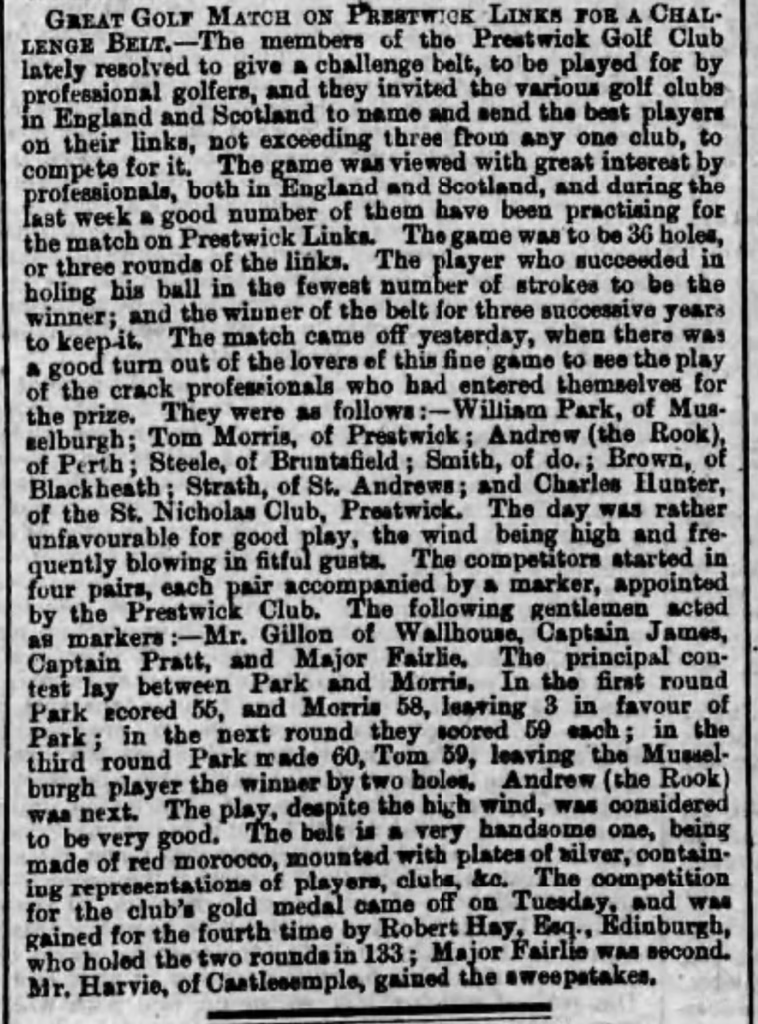
The inaugural championship at Prestwick in 1860 was an invitational event organized after the death of Allan Robertson. Prestigious clubs were invited to send their professionals to compete over three rounds of Prestwick’s twelve-hole course. There were no amateurs and no qualifying process. It was, in every sense, a closed competition.
Only in 1861 was the field expanded to include amateurs, gradually evolving into the truly open championship we recognize today.
Even its official title evolved over time. The championship eventually became known as The Open Championship, reflecting its status as a competition open to qualified professionals and amateurs alike.
Why “British Open” Became Common
The phrase “British Open” was not invented by American television executives or modern sportswriters.
It emerged naturally during the early 1900’s and throughout the 1920s as golf became increasingly international it grew more common.
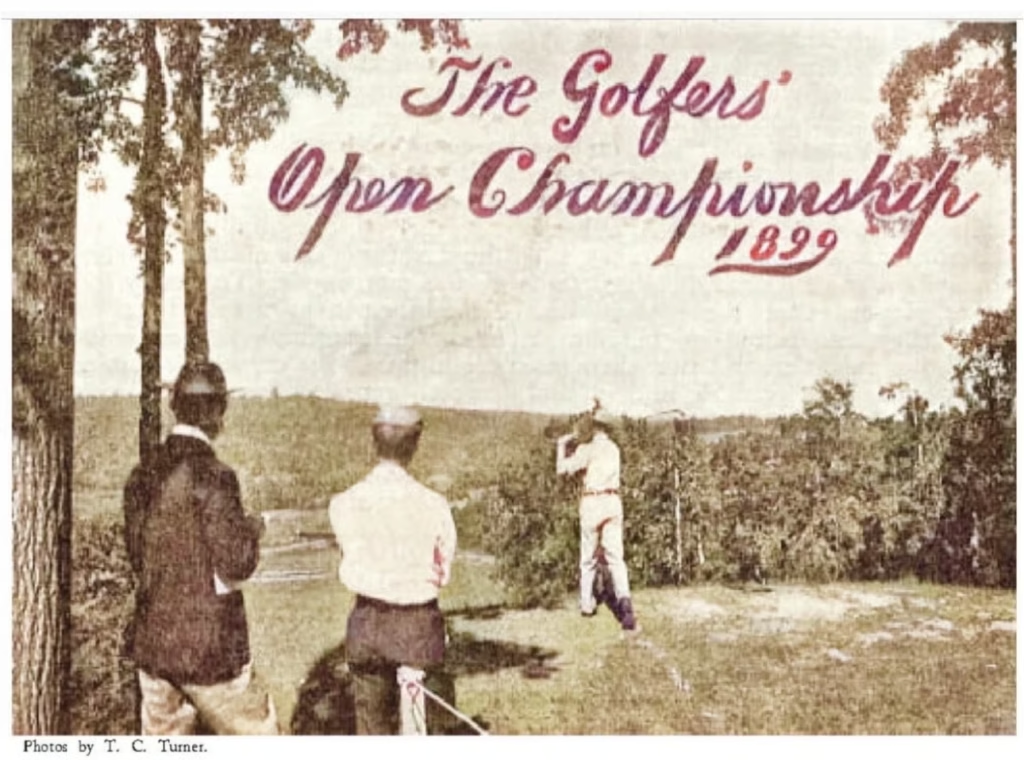
Before the First World War, relatively few players regularly crossed the Atlantic. Americans commonly referred to their own national championship as simply “The Open Championship.” Likewise, on the other side of the Atlantic often referred to their championship simply as The Open.
That changed dramatically after Harry Vardon, Ted Ray, J.H. Taylor, and other British professionals made repeated trips to America. Likewise, Americans increasingly journeyed across the Atlantic to compete for the Claret Jug.
Once two prestigious national open championships featured many of the same competitors, confusion became inevitable.
The solution was remarkably simple.

One became firmly established as the U.S. Open. The other increasingly became known as the British Open. It wasn’t meant as a slight. It was simply a practical distinction to seperate two Opens.
It Wasn’t Just Americans
One of the biggest misconceptions surrounding the debate is the belief that only Americans ever called it the British Open.
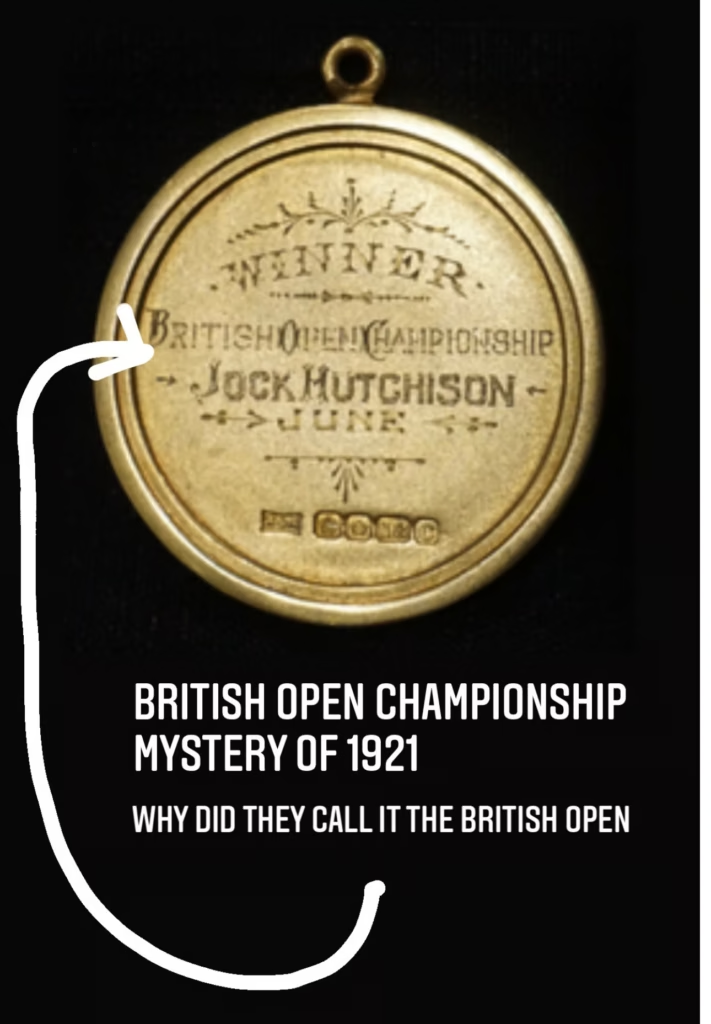
History tells a different story.
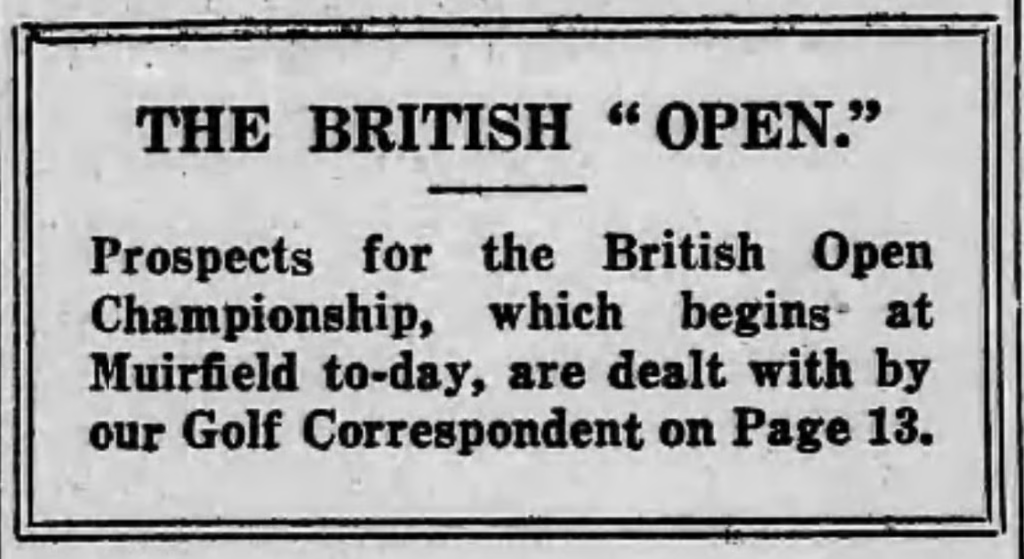
British newspapers regularly used the name. Scottish newspapers regularly used the name. Players from the United Kingdom used it. Members of the Royal & Ancient used it.
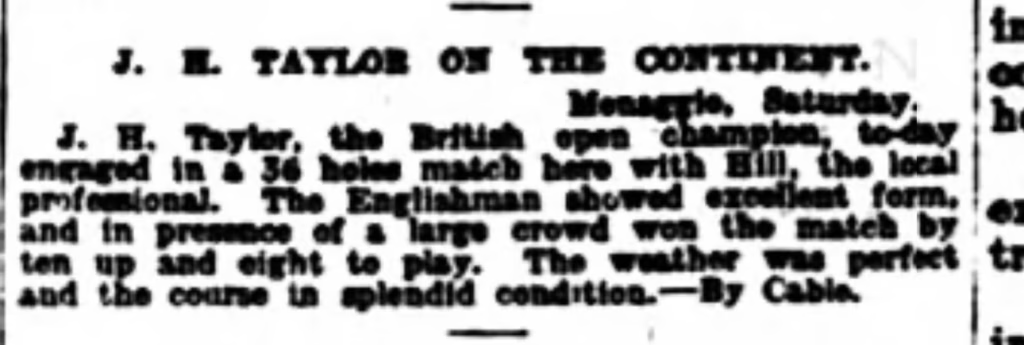
Even decades later, respected broadcaster Ben Wright frequently referred to it as the British Open. Jack Nicklaus often called it the British Open. So did Nick Faldo.
Countless players, journalists, and historians on both sides of the Atlantic used the term without controversy because, for much of the twentieth century, it was perfectly ordinary language.
The historical record makes one thing clear: “British Open” was never solely an American invention.
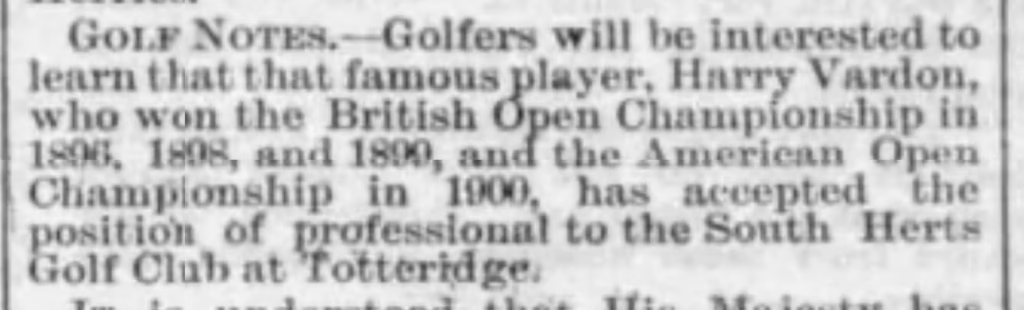
Fun Fact:
The very first use of the name “British Open” in America seems to have come from the Brooklyn Eagle in January 1900.
What Should We Call It Today?
Today, however, the answer is much simpler than the historical debate.
The championship’s name is The Open.
That is how the championship has always presented itself (outside of 1860). That is the name engraved into its identity. That is the name recognized around the world.
History explains why “British Open” became such a common expression and why generations of golfers, writers, broadcasters, and fans used it without hesitation. Understanding that history also reminds us that using the phrase should not be viewed as ignorance or disrespect. It was once entirely appropriate.
But history also teaches us something else. Institutions earn the right to define themselves. Golf’s oldest championship has chosen its name. Its name is The Open.
As custodians of golf’s history, we should respect both the journey that brought us here and the name the championship proudly carries today.
After all, there is only one championship that traces its origins to Prestwick in 1860, awards the Claret Jug, and returns each summer to the links that gave birth to the game.
There is only one Open!!!